

Every October and November, I get the same messages: “The forecast says heavy rain all week in Hoi An. Will the town flood? Should I cancel?” After years of living and working in Hoi An, my honest answer is: heavy rain in Hoi An does not mean a flood. The Hoi An flood season is real, but floods here follow a pattern you can read. Here is how it works, when you should actually worry and which areas are affected.
| Flood season | Mainly October and November, sometimes into early December |
|---|---|
| What causes floods | Heavy rain over the whole region and the mountains upstream, plus hydropower reservoirs releasing water |
| Rain in town only | Wet streets, a slower day, normal life |
| First places to flood | Riverside streets of the Old Town and An Hoi islet |
| Usually dry | The town center north of the Old Town and the beach areas |
| Best source of info | Your host, people living nearby and official water level forecasts |
I. Why Heavy Rain in Hoi An Doesn’t Mean a Flood
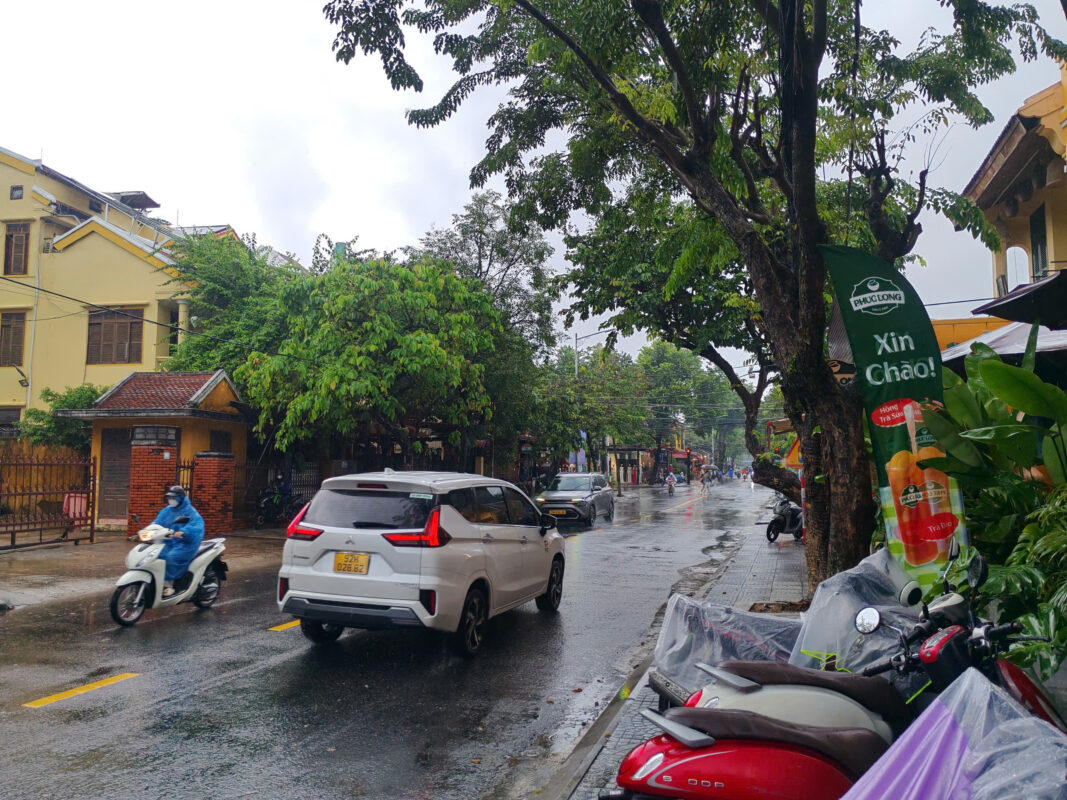
Hoi An sits near the mouth of the Thu Bon River, at the end of a big river system that starts high in the mountains of Quang Nam. The water that floods the Old Town does not fall on the Old Town. It comes from upstream.
For Hoi An to flood, several things have to happen together:
- Heavy rain over the whole region for several days, not just a few hours of downpour in town. Typically a storm, a tropical depression or a strong cold front sitting over central Vietnam.
- Lots of rain in the mountains, where the rivers and the hydropower reservoirs are.
- The reservoirs fill up and have to release water to stay safe. That release, on top of the rain, is what pushes the river over its banks downstream.
So one rainy day, or even a rainy week of showers, usually just means wet streets. Hoi An’s drains cope with normal rain, and the town keeps going. A real flood also doesn’t arrive by surprise: the river rises over hours, and the reservoir releases and water level warnings are announced in advance.
II. What a Real Flood in Hoi An Looks Like
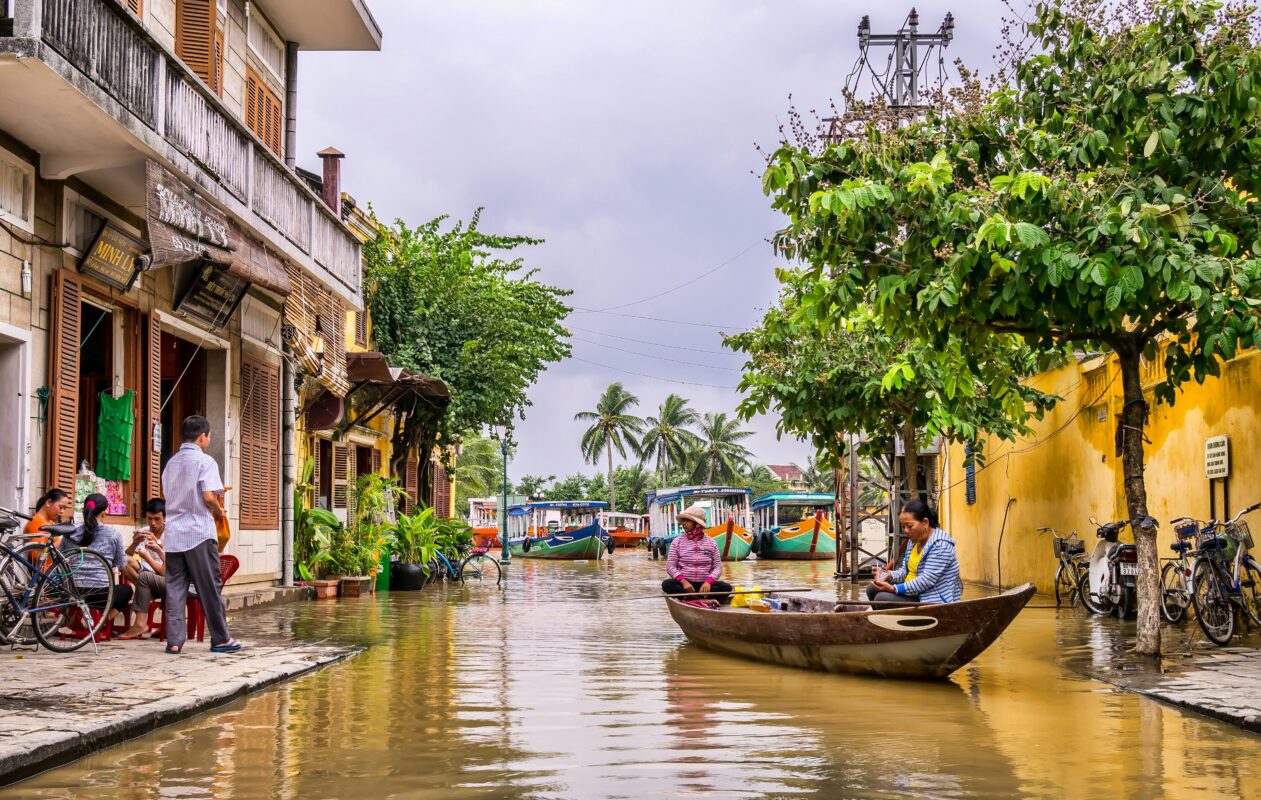
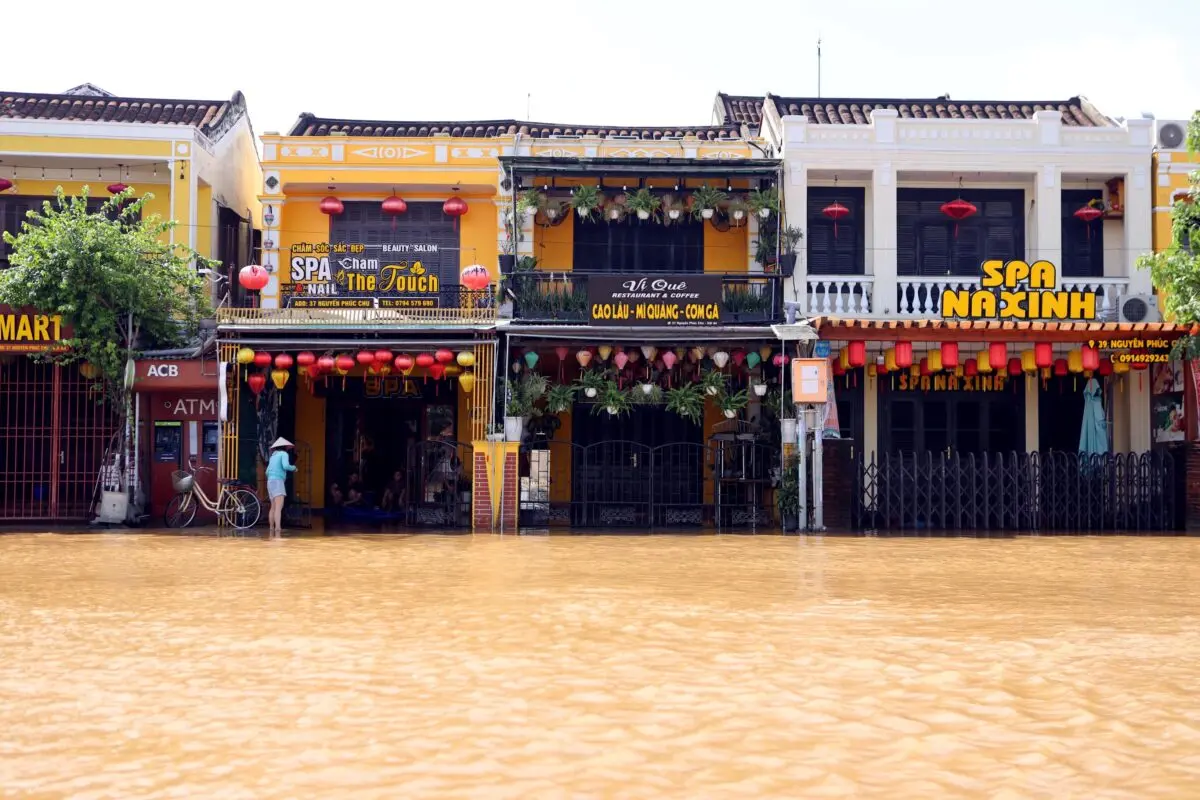
When the conditions above line up, the Thu Bon River rises at Hoi An. The highest warning level for the town (alarm level 3) is 2 meters at the Hoi An station. In late October and November 2025, after long, heavy rain across the region and large releases from the reservoirs, the river reached around 3 meters, close to the historic flood of 1964. Water reached around 1.5 to 2.5 meters on Bach Dang street along the Hoai River, and the inner Old Town streets were under water for several days.
That’s the serious version. Smaller floods are more common: the riverside streets take 30 to 50 cm of water for a day or two, boats replace motorbikes on Bach Dang street, and the rest of town carries on. Hoi An people have lived with this for centuries: goods go upstairs, boats come out, and after the water leaves everyone cleans the mud and reopens.
III. Areas That Flood and Areas That Usually Stay Dry
| Area | Flood risk | What to expect |
|---|---|---|
| Old Town riverside: Bach Dang, Nguyen Thai Hoc, the lower end of Tran Phu | High | The first streets to flood. Shops move their goods up, boats run on the streets |
| An Hoi islet: Nguyen Phuc Chu street, the night market | High | Floods at the same time as the riverside, often deeper |
| Low villages along the Thu Bon River, such as Cam Kim and parts of Cam Thanh | Medium to high | Roads can be cut for a day or two in a big flood |
| Town center north of the Old Town: around Ly Thuong Kiet, Hai Ba Trung, Tran Hung Dao | Low | Usually dry, only reached in exceptional floods |
| Beach areas: An Bang, Cua Dai | Low for river floods | Watch wind and waves when a storm passes |
If you travel in October or November and want peace of mind, choose a stay in the town center or near the beach rather than right on the river. My guide on where to stay in Hoi An compares the areas.
IV. So When Should You Actually Worry?
Instead of watching the rain clouds, watch these signs:
- Storm or depression warnings for central Vietnam from the National Center for Hydro-Meteorological Forecasting.
- Water level forecasts for the Thu Bon River at Hoi An, especially when they mention alarm level 2 or 3.
- Announcements of reservoir releases upstream. This is the clearest sign that the river will rise in the next hours.
- What people around you are doing. If the shop owners on Bach Dang are moving goods upstairs, take it seriously.
And the simplest tip of all: ask the people who live here. Your hotel or homestay owner, the café on the corner, your driver. They follow the river every season and know much better than any weather app whether a rainy forecast means anything.
If a flood does come
- Don’t walk or ride through moving water. It is stronger and dirtier than it looks, and you can’t see open drains.
- Be careful walking along the riverbanks. Along the Thu Bon River there are steps leading down to the boat landings, and rising water can cover them completely. Stay on streets where you can clearly see the ground, and never wade into water when you can’t see what is underneath.
- Move your rental motorbike to higher ground early, and keep your phone charged; power is often cut in flooded areas.
- Change plans, not your mood. Swap the Old Town walk for a cooking class or a lantern making class, or see more activities for the rainy season.
Not sure about your dates? Message us on WhatsApp +84 903 532 168. We’ll tell you honestly what the river is doing, and if you need to move, we can arrange a private taxi to a drier part of town or to Da Nang.
Hoi An grew up on the Thu Bon River, and living with its floods is part of the town’s story.
Final Thoughts
Don’t cancel a trip just because the forecast shows rain in Hoi An. Floods need much more than a rainy day: heavy rain across the region, full reservoirs and released water. Watch the official warnings, ask the people who live here, choose a stay away from the river in October and November, and keep a little flexibility. Most rainy-season visitors simply get a quieter, greener Hoi An.
Frequently Asked Questions
When is the flood season in Hoi An?
Mainly October and November, sometimes into early December. Most years have a few days of flooding in the riverside streets, and big floods are less frequent.
Does heavy rain in Hoi An mean the town will flood?
No. Floods in Hoi An come from heavy rain across the whole region and the mountains upstream, combined with water released from hydropower reservoirs. Rain in town alone usually just means wet streets.
Which areas of Hoi An flood first?
The riverside streets of the Old Town such as Bach Dang and Nguyen Thai Hoc, and An Hoi islet around Nguyen Phuc Chu street. The town center north of the Old Town and the beach areas usually stay dry.
Should I cancel my trip to Hoi An in October or November?
Usually not. Keep your plans flexible, stay away from the river, follow official warnings and ask your host. If a real flood is forecast, you will normally know a day or so in advance.
From Vincent – the Author
If you find this post useful and would like to show your appreciation, you can support me by making a donation via PayPal. Your generosity helps me continue creating helpful content. Thank you!
Paypal Link: [Click here]
HOI AN FAIRY TOUR – HOME – TOURS & ACTIVITIES – TAXI – TRAVEL ESSENTIALS – HOI AN TRAVEL TIPS – ABOUT US
