

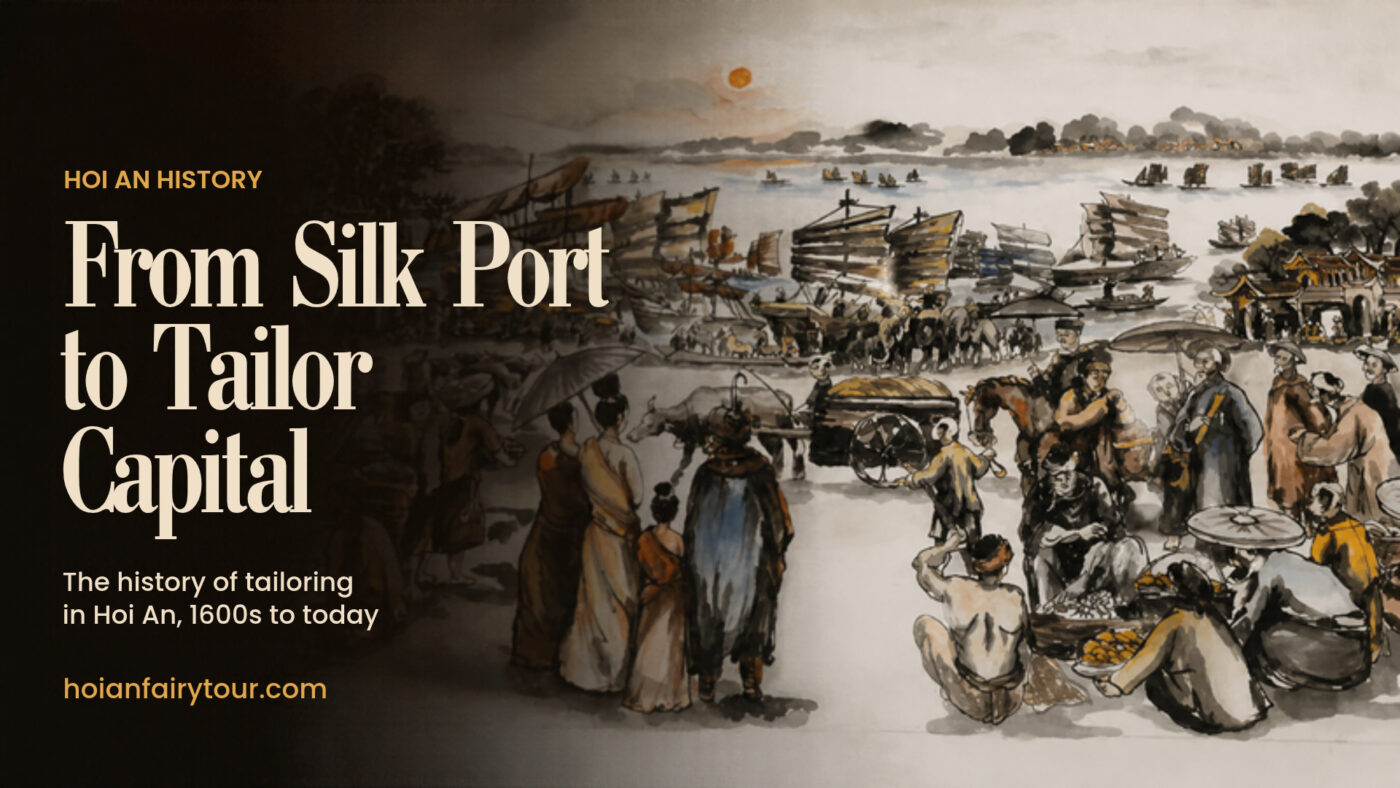
Walk down Tran Phu or Le Loi street and you will pass a tailor shop every few doors. It is easy to assume this is just a tourist trend. It isn’t. The history of tailoring in Hoi An starts with a silk port that traded with Japan, China and Europe 400 years ago, survived two centuries of decline, and came back as one of the busiest made-to-measure towns in the world. This guide tells that story in five chapters, with sources, and explains why the craft is so strong today.
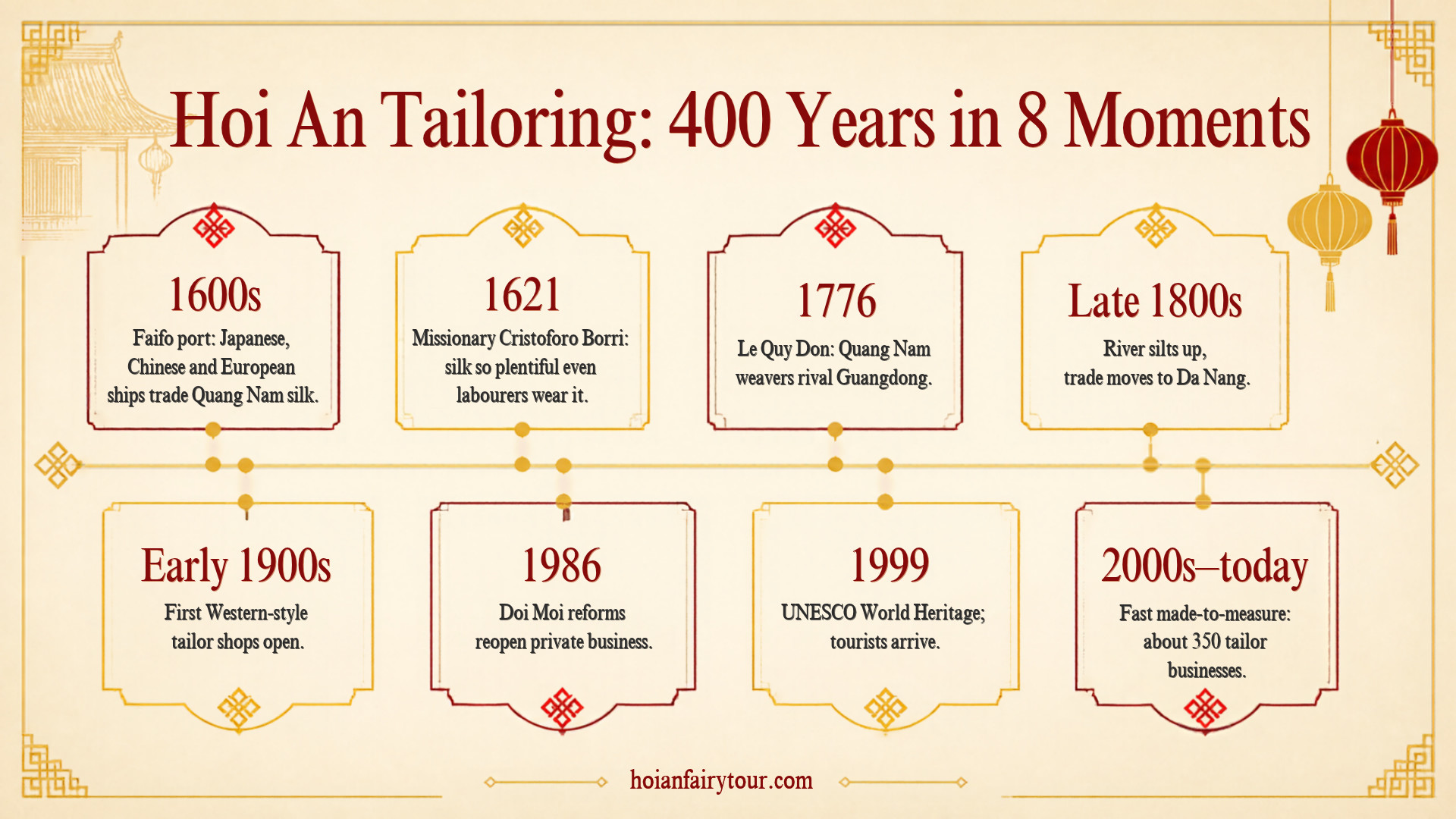
| Roots | Quang Nam silk weaving and the Faifo trading port (1500s–1700s) |
| First Western-style tailors | Early 20th century |
| Turning point | Doi Moi reforms (1986) and UNESCO World Heritage listing (1999) |
| Fast tailoring boom | 2000s onwards |
| Today | About 350 tailoring businesses and thousands of workers |
| Visitors | About 4.4 million (≈ $171) (2024) and close to 5 million (≈ $195) (2025) to the old town |
Planning to order clothes? This post is the history. For choosing a shop, read our Hoi An tailor guide. For prices and timing, see Hoi An tailor prices 2026.
What the records show, and what they don’t. Many websites say Hoi An tailors have been sewing for foreign merchants since the 1600s. We could not find a document that proves an unbroken line from the old port to today’s shops. What the records do show is a long silk and cloth trade in Quang Nam, a town used to serving foreign customers, and a tailoring trade that grew from the early 1900s. That is the story we tell here.
I. Before the Tailors: Hoi An as a Silk Port (1500s–1700s)
A port built for trade
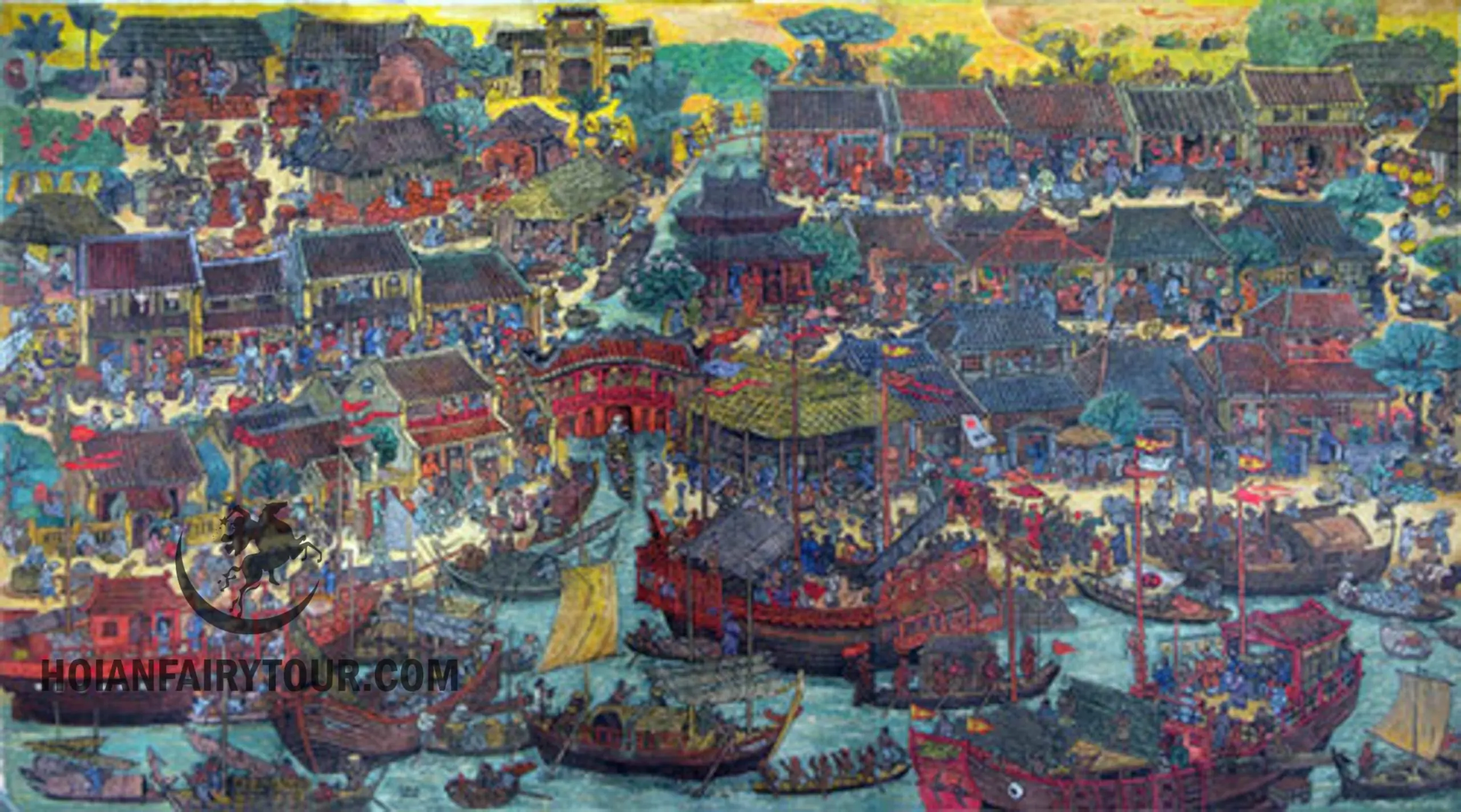
From the late 16th century, Hoi An, known to foreign traders as Faifo, was the main port of Dang Trong, the southern realm ruled by the Nguyen lords. Ships from China, Japan, Portugal and the Netherlands came with the monsoon winds and waited months for the wind to turn. Japanese merchants sailing under the shogun’s “red seal” licences built their own quarter, and Chinese families settled for good. The Japanese archives still keep a letter of 1606 from Lord Nguyen Hoang about this trade. Historian Li Tana describes this world in her book Nguyen Cochinchina, where silk and other Quang Nam goods were in high demand.
Quang Nam silk: the raw material
Tailors need cloth, and Quang Nam had plenty. The silk village of Ma Chau in Duy Xuyen, about 30 km from Hoi An, dates back to around the 16th century and reached its peak in the 17th and 18th centuries. In 1621 the Italian missionary Cristoforo Borri wrote that silk was so common that even labourers wore it, and that it was sold to Japan and Laos. In 1776 the scholar Le Quy Don wrote in Phu Bien Tap Luc that weavers in Thang Hoa and Dien Ban could match the silk of Guangdong.
Five conditions that built the craft
Silk villages and mulberry fields along the Thu Bon river.
Foreign merchants who stayed for months and needed goods and clothes.
Vietnamese, Chinese and Japanese dress side by side, so makers learned to copy and adapt.
Skills passed from parent to child inside small household businesses.
A town that has always lived by serving visitors, then and now.
II. Decline and Survival (1800s–1986)
In the 19th century the Thu Bon river mouth silted up and big ships could no longer reach the town. The French made Da Nang the main port, and Hoi An became a quiet place. That quiet helped the old houses survive, and in the 1980s the Polish architect Kazik helped the world see why they were worth protecting.
Tailoring in the modern sense appears in this period. According to the Hoi An World Heritage Conservation Centre, Western-style tailor shops opened in the early 20th century, making shirts, trousers and jackets for officials, teachers and the town’s middle class. Tailors in Hoi An still hold a ceremony to honour the founders of their trade. Then came the hard decades. Wars from 1945 to 1975 and the planned economy from 1975 to 1986 shrank private business, and many silk looms in Ma Chau stopped. The skills survived mostly inside families.
III. The Revival: How Tourism Turned a Craft into an Industry (1986–2010s)
Three events changed everything. The Doi Moi reforms of 1986 allowed private shops again. In 1999 Hoi An Ancient Town was added to the UNESCO World Heritage list, and visitor numbers began to climb. Then, around the 2000s, shops discovered that travellers loved one thing above all: a made-to-measure suit or dress ready before they left town. “Fast tailoring” was born.
In 2006, during Quang Nam’s National Tourism Year, tailoring was named one of the province’s official tourism products, and international media, including Time, listed Hoi An among the fastest and most affordable places in the world to have clothes made. The reputation has been growing ever since.
The old port sold silk to the world. The new town sells something harder to copy: skill and speed.
Vincent, Hoi An Fairy Tour
IV. Hoi An’s Tailoring Industry Today
According to Nhan Dan newspaper (2024), Hoi An has about 350 tailoring businesses, and most of the tailors are women. The trade supports thousands of people beyond the shops: silk farmers, weavers, fabric sellers, embroiderers, delivery staff and guides. In 2023 the town recognised a tailoring craft village in Cam Nam ward, and in peak season a big shop can serve hundreds of customers a day. Since 2025 Hoi An is part of Da Nang city, but the craft keeps its own name and identity.
The supply chain behind the shop window
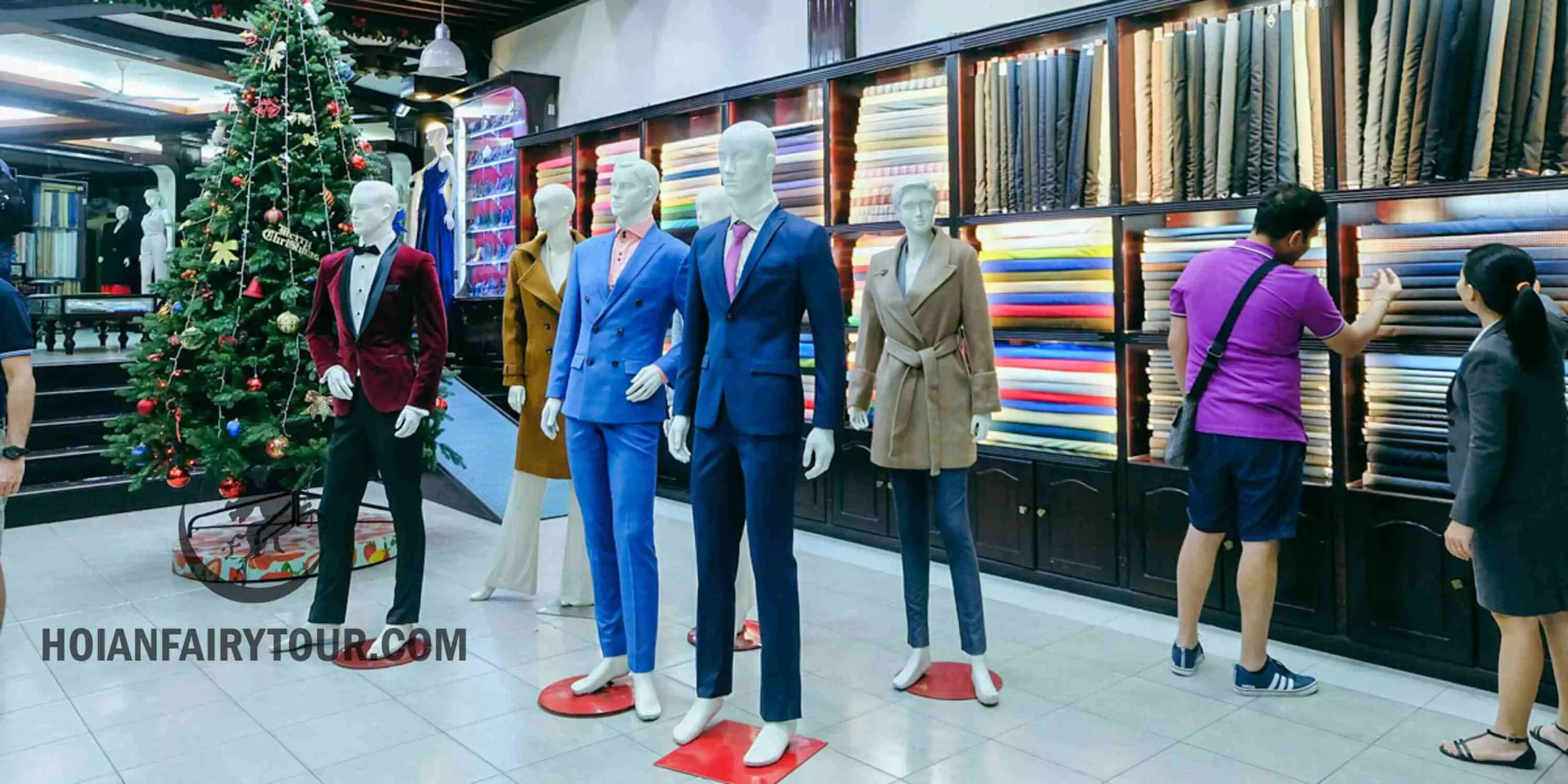
Most shop fronts are a sales and fitting space. Behind them is a network: fabric wholesalers that supply many shops at once, the Hoi An cloth market where smaller shops buy, and sewing workshops outside the old town that cut and stitch for several brands. Most fabric is not woven in Hoi An. It is bought from wholesalers, and much of it is imported, including the wool used for higher-end suits. Local Ma Chau silk is a small but growing share. When you buy, the shop name matters less than the fabric and the workshop behind it, which is why we explain how to check both in our tailor guide.
How millions of visitors sharpened the skill
The old town welcomed about 4.4 million (≈ $171) visitors in 2024 and close to 5 million (≈ $195) in 2025 (Tuoi Tre, 2026). That volume is a training school. A busy Hoi An workshop handles far more orders than a tailor in a quieter city ever sees. Shops have built pattern libraries for every body type, and workshops have split the work into steps so a garment can move from cutting to finishing in a day. The result is speed and consistency that is hard to find elsewhere. The risk is that speed can push out the fittings that make a garment fit well, which is the most common problem we see with our own guests.
Why shared supply keeps prices low
- Shared fabric pool: many shops buy from the same wholesalers, so fabric costs stay close and nobody can charge much more for the same cloth.
- Piece-rate workshops: outsourced sewing is paid per garment, which keeps labour costs predictable.
- Heavy competition: with hundreds of shops in a small town, prices are pushed down, sometimes too far.
- The downside: very cheap offers often mean cheaper fabric, lining or finishing. Our price guide shows what a fair price buys in 2026.
V. Hoi An on the Fashion Map: Silk Runways and Growing Brands
Ma Chau silk returns to the runway
After almost disappearing, Ma Chau silk has been reinvented. Since becoming Ma Chau Silk Company in 2017, the village moved from wooden looms to modern machines, widened its fabric from 70–90 cm to 1.8 m, and uses computer patterns with far more detail, producing around 3,000 m² of fabric a month (Bao Quang Nam, 2023). Vietnamese designers such as Ngo Nhat Huy, Le Thanh Hoa and Huy Vo have used it in collections, and it appeared at Miss International and Miss Grand Vietnam in 2022 and at Vietnam International Fashion Week. The “Quang Nam silk” certification mark has protected the name since 2018.
Silk is also part of the town’s festivals. The Quang Nam Heritage Festival, held every two years since 2003, features silk fashion shows, and in April 2026 the show “Hoi An – Colours of Silk” was part of the Da Nang Ao Dai Festival.
Tailor brands reaching beyond the old town
- Yaly Couture: one of the largest names in town, with several branches, around 300 artisans according to its website, and international shipping.
- BeBe Tailor: a large shop with a branch in Da Nang, featured on Australian TV travel shows.
- A Dong Silk: in business since 1997, one of the longest-running shops in the old town.
- Faifo Tailor: founded by an entrepreneur with 30 years in the garment trade. It offers phone-based body measurement, a library of about 10,000 fabrics and hotel delivery, and says it wants to grow into hundreds of stores.
- Online tailors: several Hoi An workshops now take measurements online and ship suits worldwide, so customers can reorder from home.
Big global brands have also moved into the old town. We wrote about that change in how international brands found their way into Hoi An.
VI. See the History for Yourself
- Walk the merchant streets: Tran Phu and Nguyen Thai Hoc streets were the heart of the trading town. Our Hoi An audio walk or the walking tour with a guide tells their story.
- Visit the old houses: several merchant houses are on the Hoi An old town ticket. See also our list of historical sites in Hoi An.
- See silk being woven: Ma Chau village in Duy Xuyen is about 40 minutes by car. A private taxi is the easiest way to get there.
- Order something yourself: start with our tailor guide, then ship it home with international shipping from Hoi An.
Sources and Further Reading
- Li Tana, Nguyen Cochinchina: Southern Vietnam in the Seventeenth and Eighteenth Centuries (Cornell, 1998).
- Li Tana, “Seventeenth-Century Dang Trong”, in A Maritime Vietnam (Cambridge University Press).
- Le Quy Don, Phu Bien Tap Luc (1776); Cristoforo Borri, account of Cochinchina (1621), as cited in research on Quang Nam silk (ArtsEduca, 2025).
- Hoi An World Heritage Conservation Centre, article on the tailoring craft (2025).
- Nhan Dan newspaper, report on Hoi An tailoring (November 2024).
- Tuoi Tre newspaper, Hoi An visitor figures (October 2026).
- Bao Quang Nam, “Ma Chau silk transformed” (November 2023).
FAQ: History of Tailoring in Hoi An
Why is Hoi An famous for tailoring?
Hoi An combines a long silk and cloth trade, a town that has always served visitors, and millions of tourists a year who want clothes made quickly. About 350 tailoring businesses work there today.
How old is tailoring in Hoi An?
Silk weaving in Quang Nam goes back to around the 16th century. Western-style tailor shops in Hoi An appeared in the early 20th century, and fast tailoring for tourists grew from the 2000s.
Where does the fabric in Hoi An tailor shops come from?
Most fabric is bought from wholesalers, much of it imported, with imported wool for higher-end suits. Local Ma Chau silk from Duy Xuyen is a smaller but growing share.
Can I visit a silk village near Hoi An?
Yes. Ma Chau silk village in Duy Xuyen is about 40 minutes by car from Hoi An and still weaves silk today.
From Vincent – the Author
If you find this post useful and would like to show your appreciation, you can support me by making a donation via PayPal. Your generosity helps me continue creating helpful content. Thank you!
Paypal Link: [Click here]
HOI AN FAIRY TOUR – HOME – TOURS & ACTIVITIES – TAXI – TRAVEL ESSENTIALS – HOI AN TRAVEL TIPS – ABOUT US
