

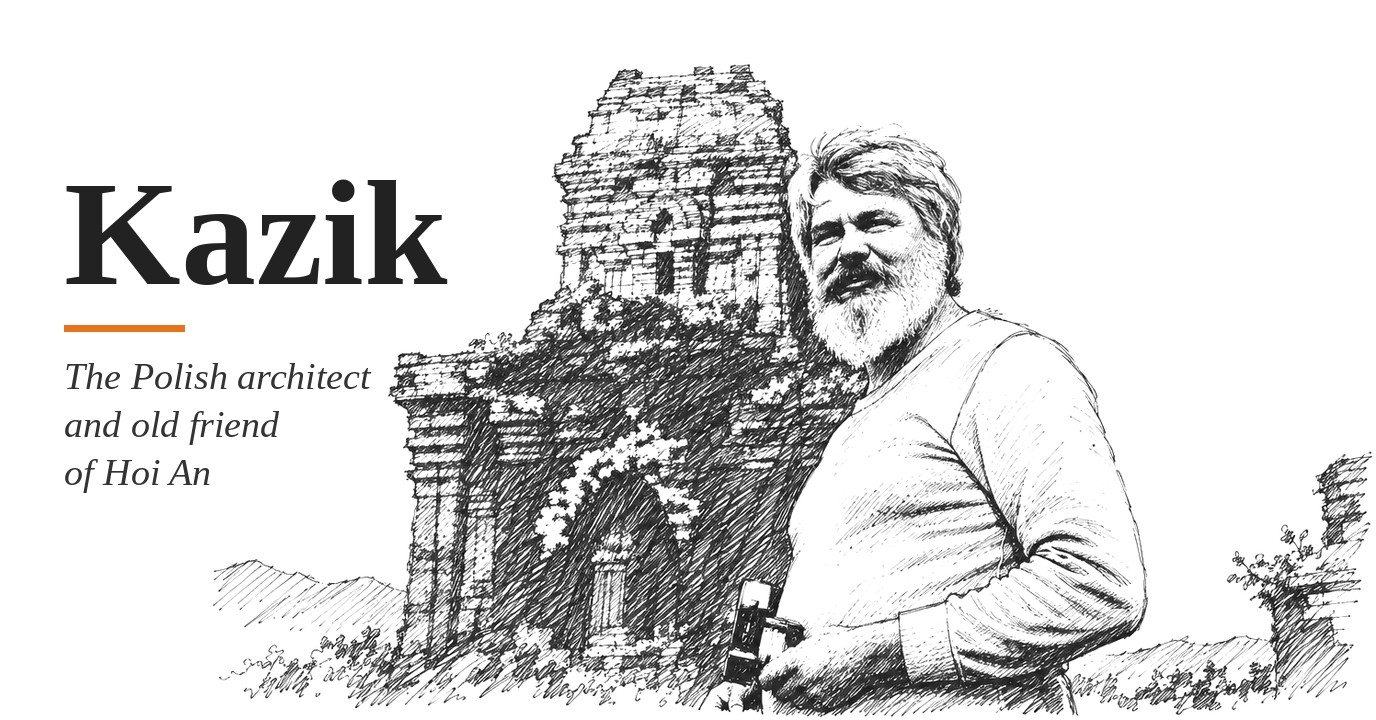
There is a corner of Hoi An where time walks more slowly. Lantern light on yellow walls. The smell of old wood after rain. Sandals whispering over worn stone.
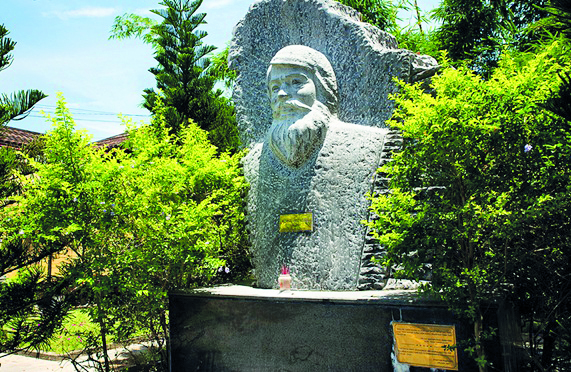
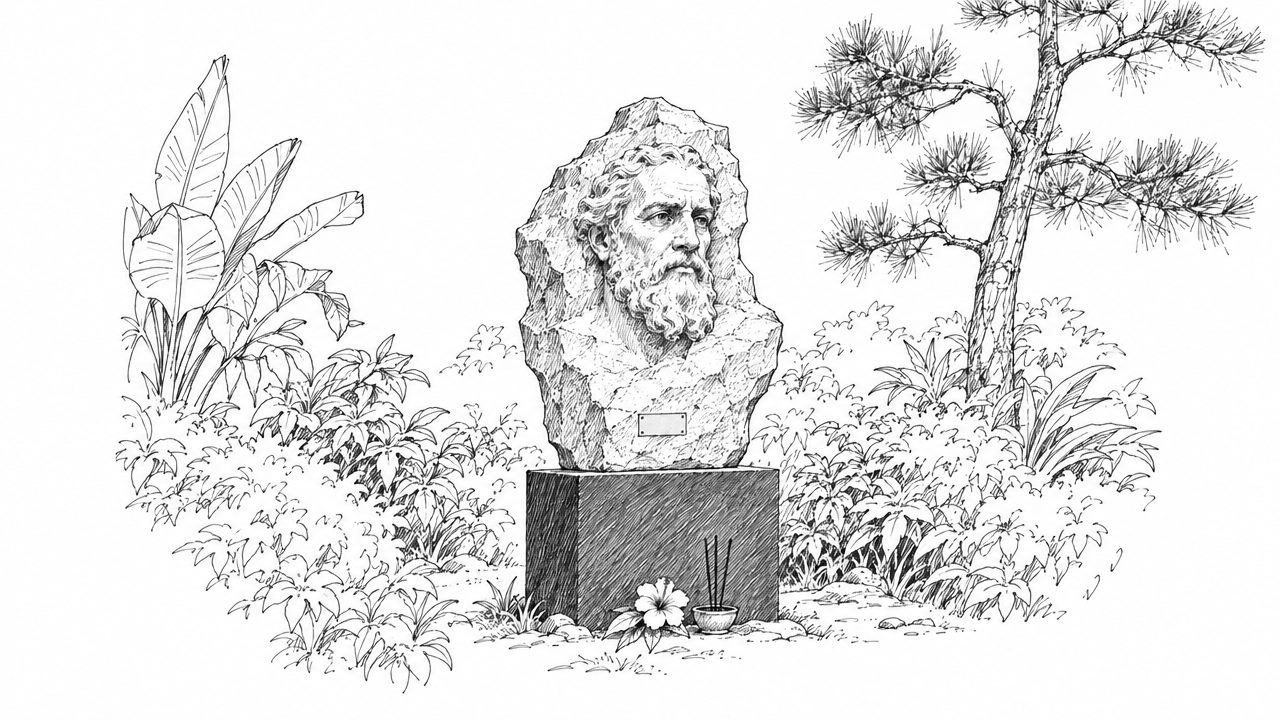
A few steps from the crowd on Tran Phu Street, there is a small green garden that most people pass without a glance. In it, a stone face with a thick beard keeps watch over the tiled roofs, as if he were still afraid that someone might take them away.
He was born in a village in Poland, far from any lantern or river like ours. He gave the best years of his life to brick towers and wooden houses in a country that was not his own. His name was Kazimierz Kwiatkowski, and he was an architect. Here, everyone calls him Kazik.
We walk guests past this garden all the time, and we noticed that very few of them know his story. So we wrote it down, checking it as carefully as we could. We think it deserves five minutes of your time.
| Who | Kazimierz Kwiatkowski, “Kazik” (1944–1997), architect and conservator from Poland |
| Where to see him | Kazik Park, 138 Tran Phu Street, Hoi An old town |
| Time needed | 10 to 15 minutes, longer if you read the signboards |
| Best time | Early morning or late afternoon, when it is quiet |
A man sitting by the roadside
Try this when you get there. Slow down and look at the kerb in front of you. Now imagine a tall, heavy-set man sitting on it, with a thick beard, looking into the distance. He does not say anything. He is just looking at the old houses, the way you might look at something you are afraid of losing.
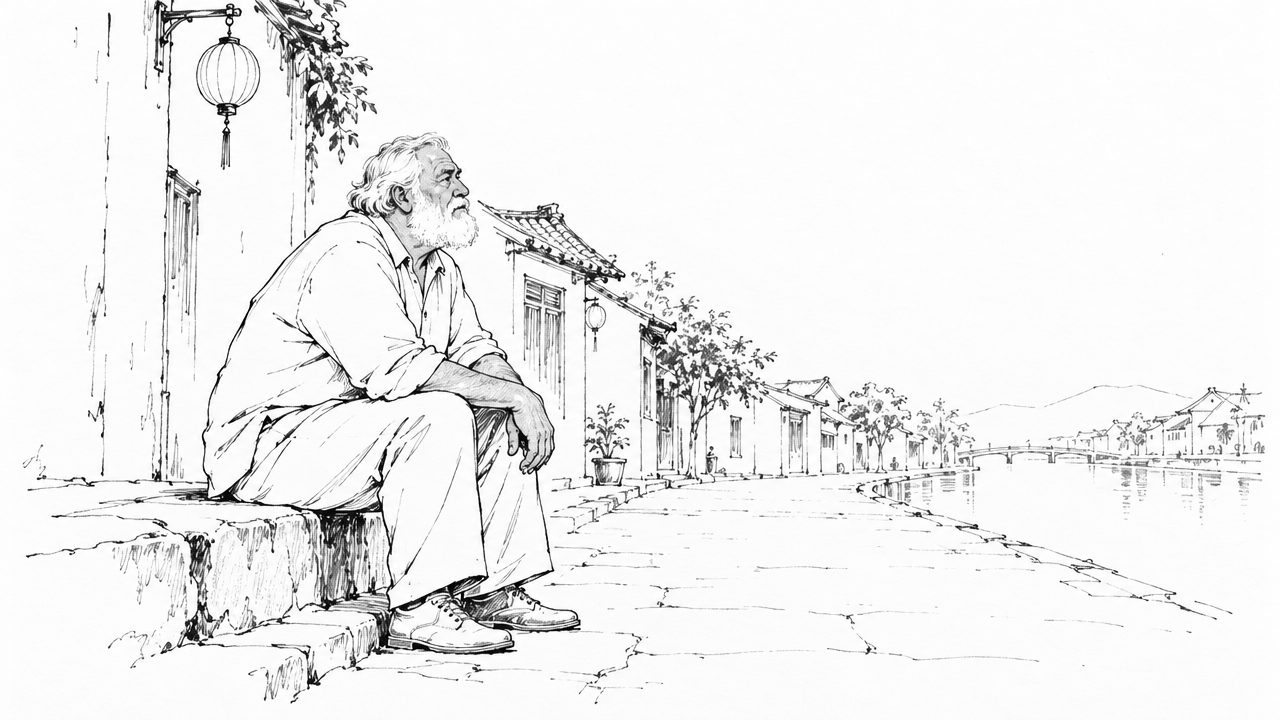
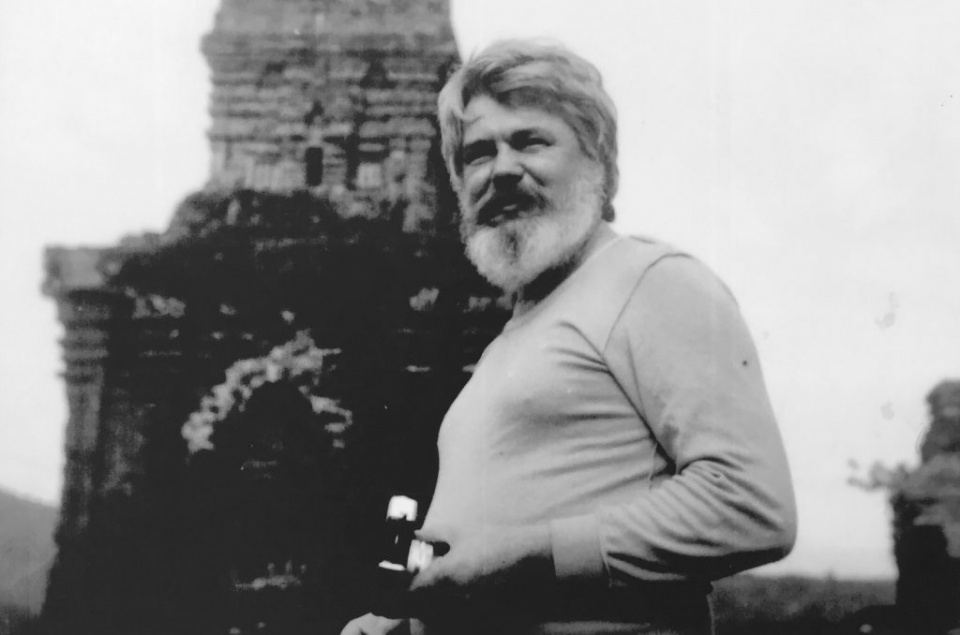
Those who worked with him describe exactly that: a very tall man, about two metres by one account, big and strong, with a beard that people still talk about, and a warm, honest manner. In Vietnam he got nicknames, among them “Kazik” and, in Polish, “the man from the jungle”.
From a Polish village to the ruins of My Son
Kazimierz Kwiatkowski was born on 2 July 1944 in the village of Pachole, in eastern Poland, and studied architecture at the Kraków Polytechnic. In the early 1980s he came to Vietnam under a cooperation programme between Poland and Vietnam, to help save the Cham towers of My Son, left in ruins by war and by the jungle.
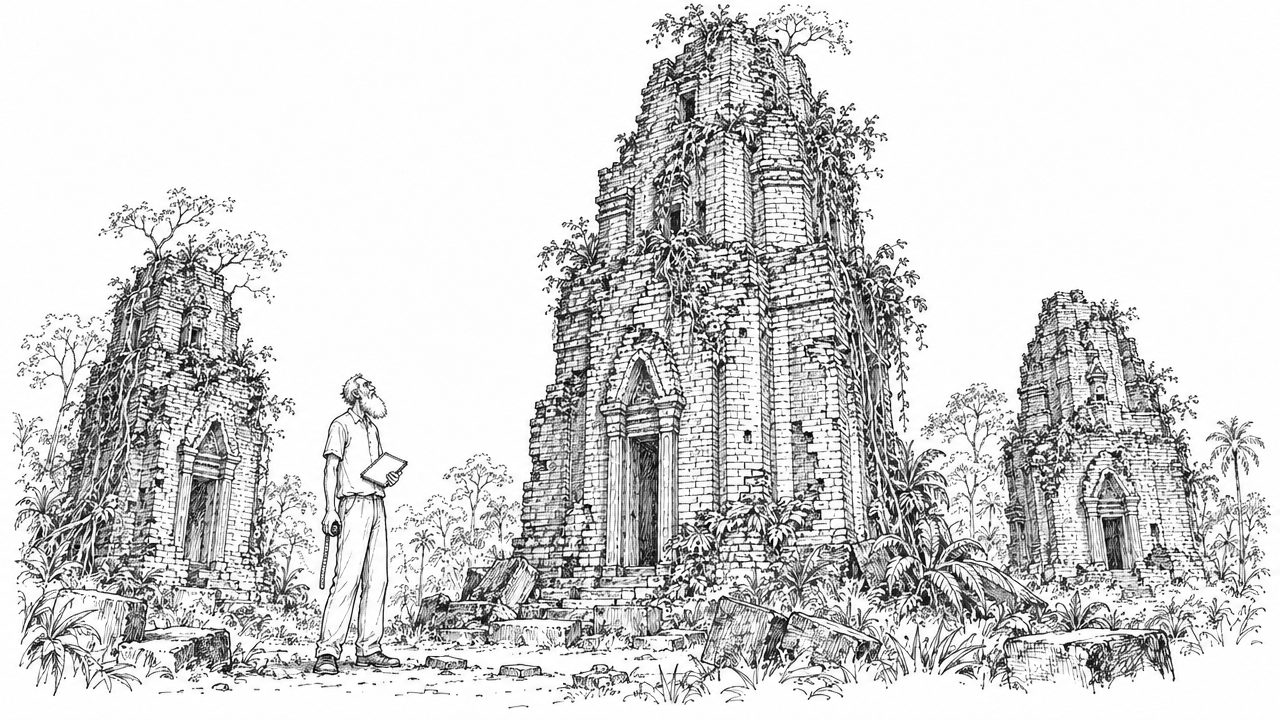
It was neither easy nor glamorous work. He lived at the site, measured, drew and photographed the towers every day, and kept a daily work diary. Today the Institute for Relic Conservation in Hanoi holds thousands of pages of documents, drawings and photographs from him and the Polish team. One of its staff says that Kazik taught Vietnamese colleagues to photograph, measure, describe and draw before, during and after every intervention (Bao Da Nang, 2017).
His principle was simple: keep as much of the original as possible, do not invent what has been lost, and make anything new honest enough to be told apart from the old. Old bricks were collected, sorted and smoothed one by one, because there were no new ones to be had, and new bricks were set slightly recessed. Professor Hoang Dao Kinh called him a “surgeon” of monuments. The epoxy resin used to mend the cracked brick came in his own luggage from Poland, because it could not be found in Vietnam (Tuoi Tre, 2017).
When the official cooperation programme ended in the early 1990s, he did not simply go home. He went looking for money, partly through a Cham culture association in Germany, so that the work could go on. Colleagues say he trained a generation of Vietnamese conservators, and that he once said he wished to be buried at My Son. He was not: his body was taken home to Poland (Tuoi Tre, 2017; Thanh Nien, 2022).
His son, a professor in Lublin, remembers that his father spent four to five months a year in Vietnam. Think about that for a moment: a man with a family at home, choosing a jungle on the other side of the world.
1982: the day he walked into Hoi An
While working at My Son, Kazik heard of an old trading port a little further along the coast. In 1982 he came to Hoi An for the first time (some sources say 1981).
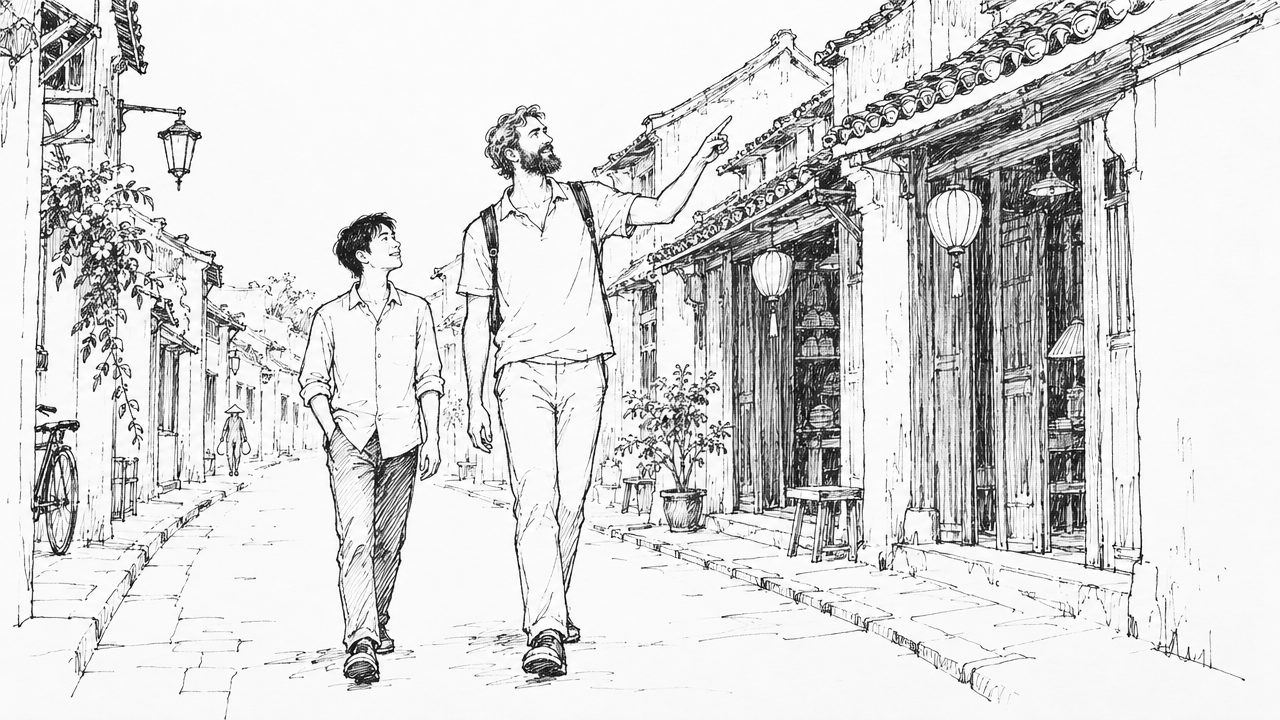
What he saw we can only imagine, because in those years Hoi An was a poor, quiet town. Many people thought of old houses as something to leave behind, and plans to modernise were in the air. Kazik looked at the tiled roofs, the wooden shopfronts and the narrow lanes, and saw something else: a town worth keeping whole.
Then he did something very practical. According to VnExpress, he urged the town to keep the old and the new in harmony, with no oversized buildings and no industry that would harm the old quarter, and on his days off he drew a general map of the old town. He was not paid for it. The same article says he was the first foreigner to sleep overnight in Hoi An after reunification, in a bed so short for him that his hosts extended it with a chair.
Not alone
It is easy to tell this story as if one foreigner saved a town by himself. That is not true, and Kazik would probably not have wanted it told that way. In the first years, architect Hoang Dao Kinh sent more than ten colleagues from the central monument restoration centre to survey, measure and draw the old houses. The first dossier was finished in early 1984, and in 1985 Hoi An was recognised as a national historic and cultural site. The people of Hoi An chose to protect their old town, and to pay for its restoration from the old town’s own tourism.
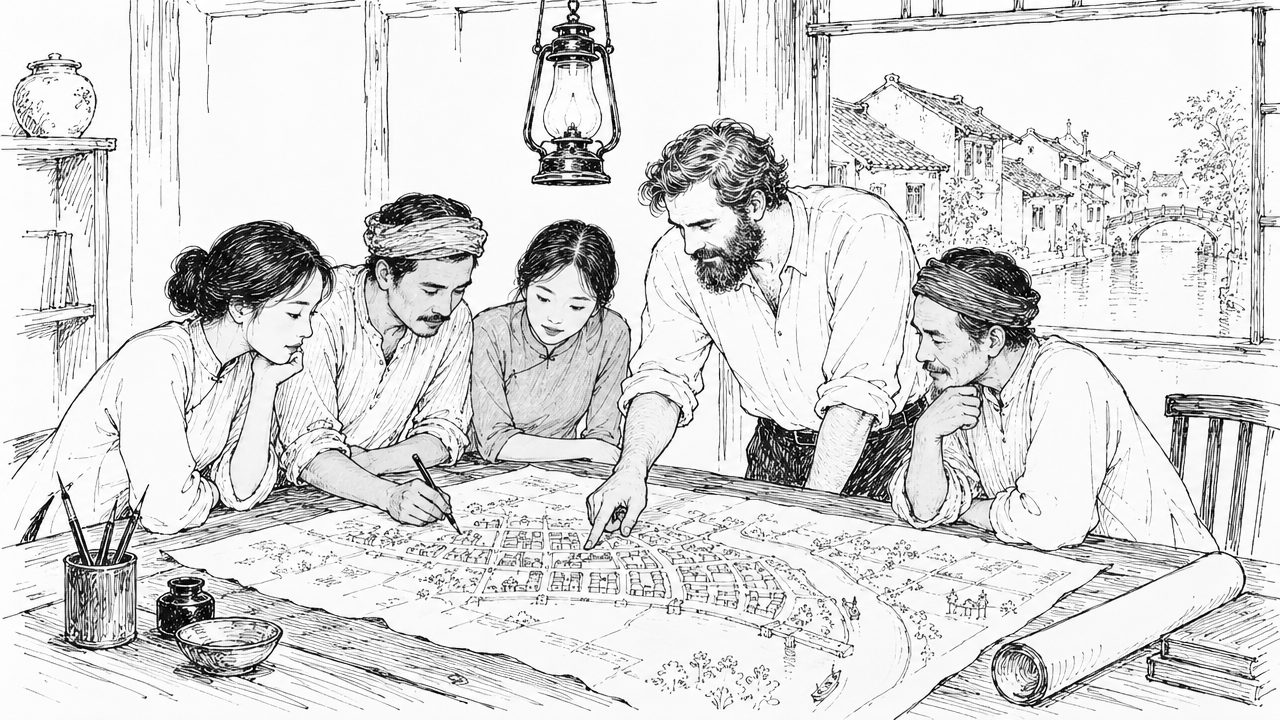
Between the man from far away and the people of Hoi An, a real friendship grew. The paperwork for UNESCO took nearly twenty years, with long stretches when it looked as if it would never move. Nobody gave up.
The day he did not see
On 19 March 1997, while working on the restoration of the Imperial City in Hue, Kazik died suddenly of a heart attack. His funeral was held in Lublin on 2 April, and he is buried there, in Poland.
Two years later, in December 1999, UNESCO inscribed the Hoi An Ancient Town on the World Heritage List. The roofs are still here. The lanes are still here. He never saw that day.
Kazik Park on Tran Phu Street
In 2007, ten years after his death, Hoi An opened a small park for him at 138 Tran Phu Street, with a stone bust and signboards about his life in Vietnamese, English and Polish. People still leave flowers and incense there. When the Polish ambassador came on the 25th anniversary in 2022, Hoi An’s chairman said: “To remember Kazik is to remember a great friend of the people of Hoi An.” At the memorial in March 2026, Poland’s honorary consul called him “a visionary who saw beauty where others saw only ruins.” In October 2026 the Polish prime minister laid flowers here, and the same month a memorial plaque was unveiled in Lublin, on the old preservation office where he once worked.
So the next time you are in the old town, turn into the green park, walk slowly, and look at his face. The man from the roadside is here. He is a very old friend of this town. You can stand there as long as you like.
Tips for visiting
- Go slowly. It is a tiny park, and the point is to stand there for a minute.
- Read the signboards. They are in three languages and short.
- Be quiet. Local people come here to leave flowers and incense.
- Plan the rest of your walk with our Hoi An tourist map, and see the old town again after dark in Hoi An at night.
- Combine it with the nearby assembly halls and Cam Pho communal house; the Polish prime minister visited both on his trip.
FAQ
Who was Kazik in Hoi An?
Kazimierz Kwiatkowski (1944–1997), a Polish architect and conservator who worked in Vietnam from the early 1980s on My Son and Hue, and who helped Hoi An keep its old town and prepare its UNESCO dossier.
Where is Kazik Park in Hoi An?
At 138 Tran Phu Street, in the old town. It has a stone bust of him and signboards in Vietnamese, English and Polish.
When was Hoi An listed by UNESCO?
In December 1999, two years after Kazik died.
Sources
-
<
- VnExpress, “Hành trình đưa Hội An thành di sản thế giới” (29/03/2025)
- Tuổi Trẻ, 17/03/2017
- Tiền Phong, 18/03/2022
- PAP / dzieje.pl, Lublin plaque (October 2026)
- Wikipedia: Kazimierz Kwiatkowski (architect)
From Vincent – the Author
I wrote this one slowly, because I wanted to get it right. If it moved you, or if you simply find the guides useful, you can buy us a coffee on PayPal. Thank you for reading.
HOME – TOURS & ACTIVITIES – TAXI – TRAVEL ESSENTIALS – HOI AN TRAVEL TIPS – ABOUT US
